



Institute News

- Woman inner peace and family general health seminar announcement
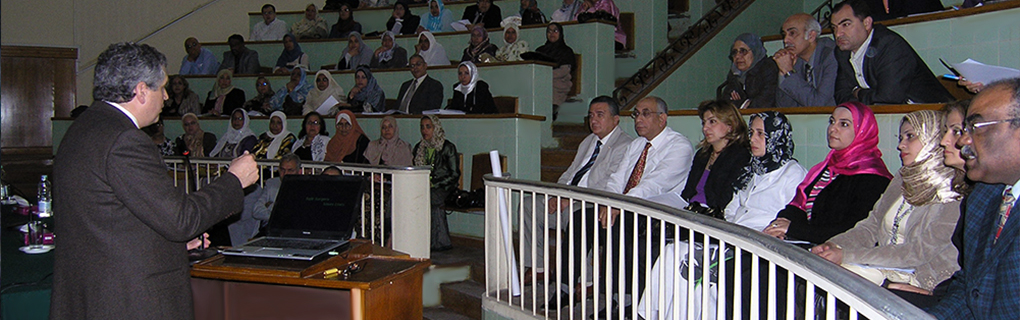
- The 2nd Conference of Medical Biophysics and its Applications
- Handwashing awareness
- 6th october artistic and cultural competition announcement
- leukemia Awareness Month Sceitific day
- Students Orientation Autumn 2025/26
- 6th October celebration
Students News

- MRI Postgraduate application extension till 21 Aug...
- GraphPad Prism as a statistical tool for biomedica...
- Tools of References Management " EndNote "
- MRI Postgraduate application procedures
- Exam Schedule Spring 2025
- The Fourth Student Conference of the Medical Resea...
- Announcement for new students, registration spring...
Conferences

We have many specialized clinics that are suitable for all medical conditions to reach the highest levels of therapeutic service.
Our goal is to ensure the highest level of services for patients through the best international standards by a team of specialized medical professors of the of Medical Research Institute .
Cardiology clinics
Immunology and Allergy Clinic
Breast Diseases Clinic
Genetic Diseases Clinic
Nutrition and metabolism Clinic
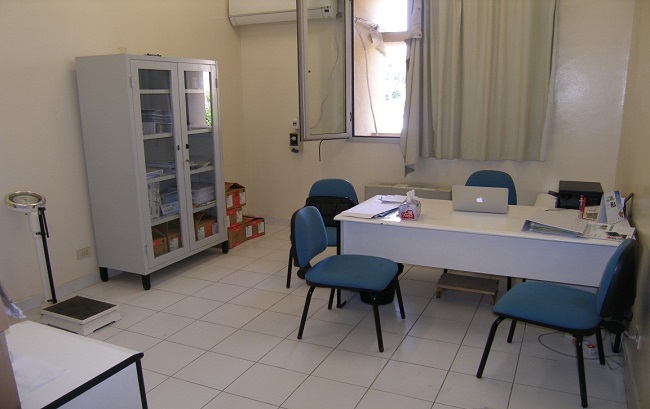
The Clinical Research Unit (CRU) at Medical Research Institute-Medical Technology center is a unit that provides an optimal setting for researchers to conduct safe, controlled, inpatient and outpatient clinical studies.
The highly trained research team at CRU helps investigators facilitate the day-to-day research process and assists the research subjects in a supportive and efficient environment.
Since 2013 , the CRU facilities provide the environment and resources for medical research in different therapeutic areas as follow:
- Oncology
- Hematology
- Nephrology
- Hepatology
- Cardiology
- Immunology
- Human genetics
- Pain management
Medical Research Institute is a partner site with IQVIA and conducts all clinical trials according to Good Clinical Practice (GCP) guidelines developed by the International Conference on Harmonization (ICH) and the principles contained in the World Medical Association Declaration of Helsinki on the” Ethical Principles for Medical Research Involving Human Subjects .
Our laboratories are characterized by the presence of many modern research analyzers, and characterized by the presence of an assistant researcher during the experiment from the beginning to the end to provide assistance and coaching, as well as the reviewing and releasing of results under the supervision of faculty members the Medical Research Institute, we also provide the service of statistical analysis of research findings.
Molecular Biology Unit
The Molecular Biology Unit serves many specialties in the fields of medicine, pharmacy, science and veterinary medicine through a team with the highest scientific degrees in the field of molecular biology. In order to develop scientific and academic aspects, the unit offers specialized training courses in the field of molecular biology.
Services:
- Real time PCR
- Conventional PCR
- Gradient PCR
- Semiquantitative PCR (gel documentation system)
- RAPD PCR
- Cloning
- SNP & RFLP assays
- microRNA assays
- hybridization techniques (HLA-typing, pharmaceutical tests)
Cell Culture Unit

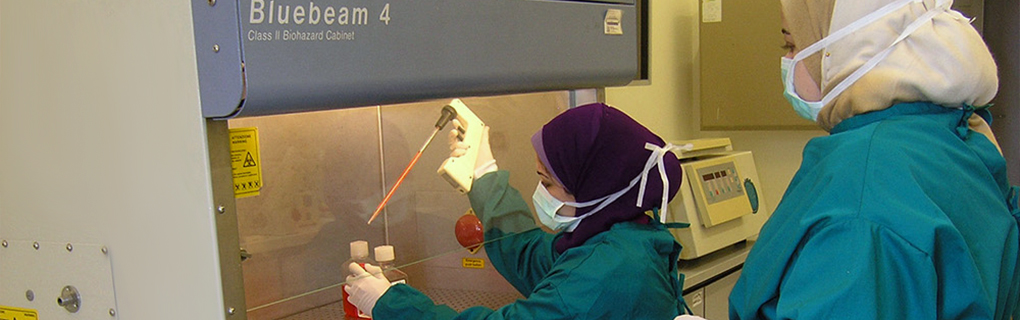
The cell culture unit conducts laboratory experiments on eukaryotic cells to serve postgraduate students in the fields of medicine, pharmacy and science through an integrated research team with the highest degrees of training and training in cell and tissue culture in laboratories.
Services:
- Availability of different cell lines
- Cytotoxicity using MTT, or NUR
- Application of treatments for subsequent analysis
- Isolation of mesenchymal stem cell from bone marrow of experimental animals
- Migration assay ( scratch assay)
Cytogenetics Unit
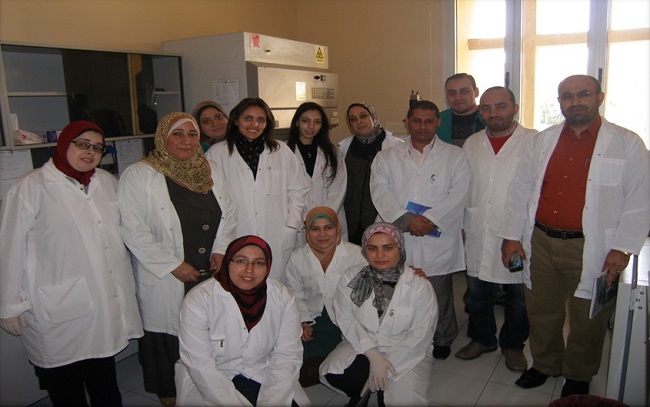
The Cytogenetics Unit provides Chromosomal analysis to a group of patients includes:
- Developmental delay and/or multiple congenital anomalies suggestive of a particular trisomy
- Abnormal size/growth and other features suggestive of a sex chromosome abnormality
- Mental retardation
- Ambiguous genitalia
- Amenorrhea
- Possible balanced chromosome translocation carrier
- Recurrent miscarriages
- Infertility
Histopathological Unit
The unit serves the postgradual students and researcher through:
- Prepares the slices of wax, snow and cytology.
- Stains the wax, snow and cytological slides with histological dyes.
- Stains the antibody –antigen reaction by immunohistochemical and mmunocytochemical protocols.
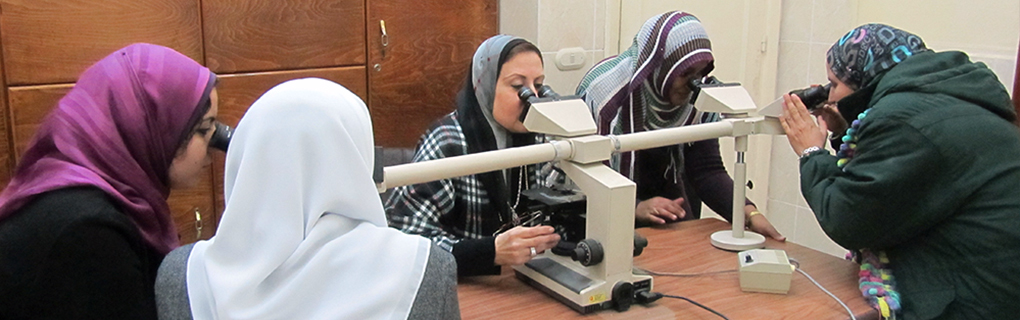
Optical light Microscopic Unit
The unit serves the postgradual students and researcher through
- Photographs the wax , snow and cytology slides follow by reports of the images.
- Quantitative analysis of images in the form of statistical tables
Nanotechnology Unit
The Nanotechnology Unit prepares nanomaterials that serve the medical and environmental fields and assists researchers in the field of nanoscience by providing scientific advice to solve research problems. The Nanotechnology Unit also welcomes joint research in the field of nanotechnology and conducts training courses for researchers in the field of nanotechnology.
Chromatographic Unit
The chromatography process is not only one of the most important analytical techniques, but it is a stand-alone science that is applied in many fields such as routine medical biopsies, environmental analyzes, and various industries such as the pharmaceutical and pharmaceutical industry, as well as for research purposes such as biochemistry. It is a selective process through which qualitative and quantitative analysis can be performed by separating the components of a mixture of compounds with common physical and chemical properties.
Common facilities Laboratory
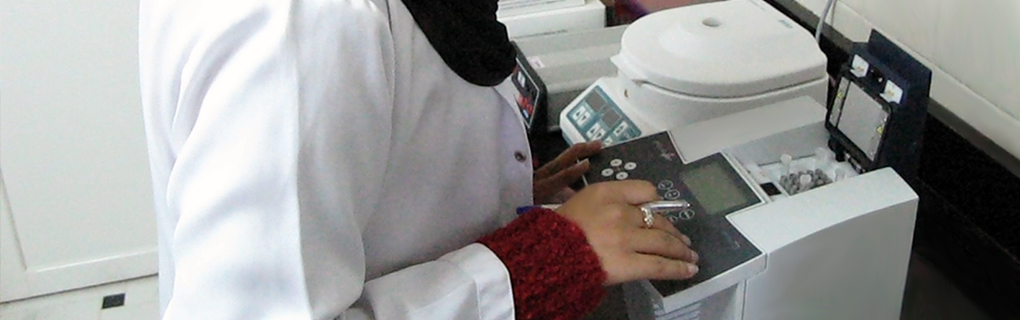
The Commen Facility Laboratory has a variety of analyzers needed by any researcher in various fields.
Services:
- Protein analysis
- Protein SDS PAGE
- ELISA Techniques
- Antioxidant determination
- Comet Assay
Animal House Unit
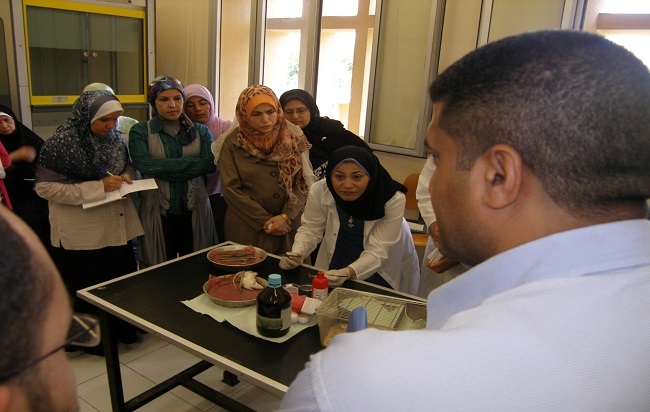
The Animal House Unit takes care of the experimental animals needed to conduct research and provide assistance to researchers from different disciplines and colleges to ensure research plans to upgrade the level of international publishing. The unit is also unique in the possibility of carrying out micro-surgical operations and the special nature of the procedure and ways of care after.
Services:
- Oral administration
- Subcutaneous injection
- Intradermal injection
- Intramuscular injection
- Intraperitoneal injection
- Intravenous injection
- Organ collection
- Breeding
Medical Laboratory
The laboratory is one of the laboratories of the medical technology center where the laboratory is based on:
Providing the best services in the health care of the community through accurate diagnosis of diseases.
The following are done in the Laboratory:
Chemical analysis, as well as all types of hormones ( thyroid gland hormones , growth hormones, fertility hormones ) and detection of all signs of tumors on all organs of the body using tumor markers .
Virus analyzes of blood and other PCR and includes diagnosis of viral diseases (HBV, HCV) and others .
Diagnosis of various blood diseases such as anemia and coagulation diseases .
Diagnosis of immune diseases such as rheumatic diseases .
Urology, parasetology and fecal examination .
The laboratory offers all its services through a highly qualified professors in the Medical Research Institute , Alexandria University, with excellent prices and offers more discounts to the employees of Alexandria University .
71 Victor Emanuel St. Smouha, Alexandria, Egypt
Tel.: (03) 4266213 , 4266213 , 4266218
Fax: (03) 4266214
E-mail: This email address is being protected from spambots. You need JavaScript enabled to view it.
Linkedin: medical-technology-center