Institute News
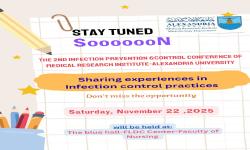
- Woman inner peace and family general health seminar announcement
- The 2nd Conference of Medical Biophysics and its Applications
- Handwashing awareness
- 6th october artistic and cultural competition announcement
- leukemia Awareness Month Sceitific day
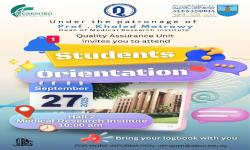
- Students Orientation Autumn 2025/26
- 6th October celebration
Students News

- MRI Postgraduate application extension till 21 Aug...
- GraphPad Prism as a statistical tool for biomedica...
- Tools of References Management " EndNote "
- MRI Postgraduate application procedures
- Exam Schedule Spring 2025
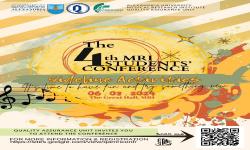
- The Fourth Student Conference of the Medical Resea...
- Announcement for new students, registration spring...
Conferences
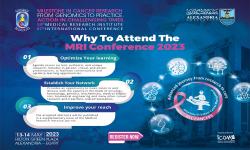
- Radiofrequency ablation for pain relief
- Image processing of medical images
- Analysis of physiological sounds
- Neonate pulmonary function test
- Modeling and simulation of physiological systems
- Sensor network
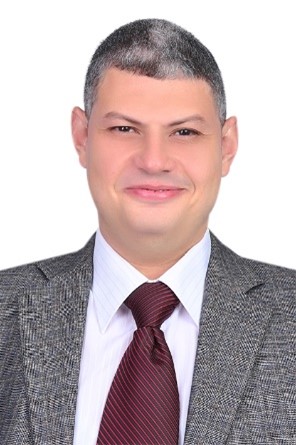
Head of Department: Prof. Dr. Mamdouh Mohammed Shawki
Emeritus Professor
| Name | CV | |
| Prof. Dr.Yousef Selim Youssef | ||
| Prof. Dr. Metwally Aly Metwally Kotb | ||
| Prof. Dr. Fatma Ismail Nasr | ||
| Prof. Dr. Nivan Mahmoud Fekry | This email address is being protected from spambots. You need JavaScript enabled to view it. | |
| Prof. Dr. Mohamed Kamal Nasra | This email address is being protected from spambots. You need JavaScript enabled to view it. | |
| Prof. Dr. Thanaa Ibrahim Shalaby | This email address is being protected from spambots. You need JavaScript enabled to view it. | |
| Prof. Dr. Soheir Mahmoud El-Kholy | This email address is being protected from spambots. You need JavaScript enabled to view it. |
Professor
| Name | CV | |
| Prof. Dr. Ehab Ibrahim Mohamed | This email address is being protected from spambots. You need JavaScript enabled to view it. | |
| Prof. Dr. Mohamed Abdel Aziz El-blbesy | This email address is being protected from spambots. You need JavaScript enabled to view it. | |
| Prof. Dr. Heba Saad Ramdan | This email address is being protected from spambots. You need JavaScript enabled to view it. | |
| Prof. Dr. Mamdouh Mohammed Shawki | This email address is being protected from spambots. You need JavaScript enabled to view it. |
Emeritus Assistant Professor
| Name | CV | |
| Ass. Prof. Dr. Abd El-Rhaman Mohamed Hereba | This email address is being protected from spambots. You need JavaScript enabled to view it. |
Assistant Professor
| Name | CV | |
| Ass. Prof. Dr. Moustafa Hussien | This email address is being protected from spambots. You need JavaScript enabled to view it. | |
| Ass. Prof. Dr. Maisa El-Sayed Moustafa | This email address is being protected from spambots. You need JavaScript enabled to view it. |
Emeritus Assistant Consultant
| Name | CV | |
| Dr. Mervat Abdel Khalek Mohamed | This email address is being protected from spambots. You need JavaScript enabled to view it. |
Assistant Consultant
| Name | CV | |
| Dr. Rasha Said Shams El Din | This email address is being protected from spambots. You need JavaScript enabled to view it. |
Lecturer
| Name | CV | |
| Dr. Abdel-Halim Mahmoud Zaki | This email address is being protected from spambots. You need JavaScript enabled to view it. | |
| Dr. Moataz Mohamed Fahmy | This email address is being protected from spambots. You need JavaScript enabled to view it. |
Colleague
| Name | CV | |
| Dr. Shaima Al-Sayed Al-Sawy | This email address is being protected from spambots. You need JavaScript enabled to view it. |
Assistance lecturer
| Name | CV | |
| Mohamed Ahmed Raafat | This email address is being protected from spambots. You need JavaScript enabled to view it. | |
| Fatma El-Zahraa Ahmed Abdul Rahim | This email address is being protected from spambots. You need JavaScript enabled to view it. | |
| Alaa Magdy Attia Abdel Latif | This email address is being protected from spambots. You need JavaScript enabled to view it. | |
| Marwa Mahmoud Saad Ahmed | This email address is being protected from spambots. You need JavaScript enabled to view it. | |
| Hadeer Moustafa Mohamed | This email address is being protected from spambots. You need JavaScript enabled to view it. | |
| Heba Taha Yousef | This email address is being protected from spambots. You need JavaScript enabled to view it. |
Domenstrator
| Name | CV | |
| Mariam Ismail Abdelsalam | This email address is being protected from spambots. You need JavaScript enabled to view it. | |
| Sara Salah Rashwan | This email address is being protected from spambots. You need JavaScript enabled to view it. |
Diploma in Medical Biophysics
Master in Medical Biophysics
Ph. D. in Medical Biophysics
Scientific Training Activities:
- Medical equipment operation, maintenance and repair
- Modern techniques in spectroscopy and its applications in industry, medicine, environment and research
- Principle and technology of sample preparation for electron microscopy
- Studying the ultrastructure of biological samples using electron microscope
- Laser and its applications in industry, medicine, environment and research
-Studying the potential toxicity of prepared nanoparticles
-Routine analysis for patients of the Medical research Institute using Dual-energy X-ray Absorptiometry (DXA), Tetrapolar Bioelectric Impedance Analysis (BIA), and Electronic Nose (E-Nose) technology and their applications in industrial, medical and environmental research.
- Teaching various Medical Biophysics syllabi in the postgraduate program for diploma, M.Sc. and Ph.D. degrees in Medical Biophysics
Research Projects:
The running research projects in the Department of Medical Biophysics are:
- “Health Hazards on Workers from Chronic Exposure to Benzene and Impact of Reducing Contamination in Work Place” (STDF – Project ID# 963, 2010)
- “Impact of Nanotechnology in Water and Wastewater Treatment” (Alex REP – 2010)
- “Galactosylated Citosan Nanoparticles Encapsulated Cisplatin for Targeted Therapy of Induced Hepatocellular Carcinoma in Mice” (STDF – Project ID# 4817, 2012)
- “A Novel Method for Early Detecting Pulmonary Tuberculosis using Electronic Nose–Based Artificial Neural Network Analysis” (STDF – Project ID# 4944, 2013)
Thesis
| Master Thesis 2018 / 2019 | ➜❘ |
| PhD Thesis 2018 / 2019 | ➜❘ |